Detect and eliminate fraudulent ad traffic.
Before you can defend against ad fraud, you must first be able to detect it.
What is ad fraud detection?
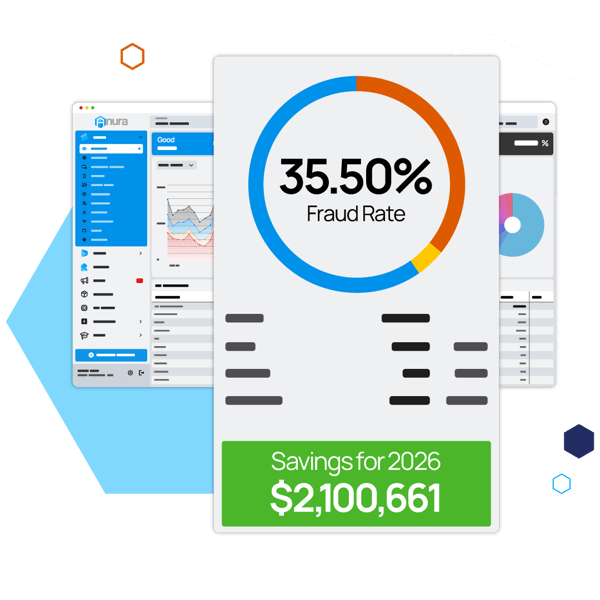
Ad fraud detection is the process of identifying fake interactions with your ads and website (impressions, clicks, form fills, installs and conversions created by bots, AI-assisted fraud and human fraud farms) so you can stop them before they waste budget or corrupt your data.
Ad fraud, also called advertising fraud, is any deliberate attempt to generate fake ad engagement to steal advertising dollars.
Why it matters: fraud does more than inflate costs. Fake traffic feeds your analytics, attribution and bidding algorithms, so you end up investing in the channels that look best, not the ones that perform best. If your data is wrong, your decisions are too.
Anura identifies bots, AI-assisted fraud and human fraud in real time, without blocking real visitors, so you can scale what’s actually working.
Ad fraud can be committed by bots, malware, or humans.
Ad fraud comes in many different shapes and sizes.
Creating an effective strategy to combat it starts with understanding how ad fraud happens.
What is a Bot?
Short for “robot,” a bot is an automated software program built to carry out a specific task that most people would find too repetitive or time-consuming. Bot traffic usually mimics normal activity such as clicking an ad, placing items in shopping carts, commenting on social media, or filling out a form. Bot fraud usually involves the use of bot farms or large collectives of bots that act in unison that is usually referred to as a botnet.
What is Malware?
Malware is malicious software installed on an unsuspecting user's computer, either desktop or mobile, that is designed to mimic a real user to perform tasks that steal advertising dollars. Tasks like viewing or clicking on ads, watching videos, filling in forms, and other unsavory activities unbeknownst to the user.
What is Human Fraud?
Human fraud is the hardest form of fraud to detect as it relies on a network of humans, instead of using bots or malware, to interact with ads and create false transactions. Because actual humans are interacting with the ads, there are no obvious signs that help ad fraud detection tools differentiate normal traffic from human fraud.
Classifications of Invalid Traffic
Invalid Traffic (IVT) can be classified into three categories:
Sophisticated Invalid Traffic (SIVT), General Invalid Traffic (GIVT), and Non-Human Traffic (NHT).
SIVT
Sophisticated Invalid Traffic
SIVT refers to highly advanced and sophisticated techniques used to generate fraudulent traffic. SIVT techniques are far more challenging to detect. This can include advanced bots that closely mimic human traffic, hijacked devices, malware, invalid proxy traffic, cookie manipulation techniques, like cookie stuffing or human fraud farms.
GIVT
General Invalid Traffic
GIVT encompasses relatively simpler and more easily detectable forms of invalid traffic. GIVT refers to bots, crawlers, spiders, or any of the kind of non-human traffic typically routed from a data center IP address. GIVT can also apply to activity-based filtration or browsers that pre-render pages.
NHT
Non-Human Traffic
NHT, also known as bot traffic, refers to traffic generated by automated bots or scripts rather than real human visitors. Bots can simulate user behavior, such as clicking on ads, visiting websites, or filling out forms, leading to inflated ad metrics and misleading campaign performance. NHT can be a subset of both SIVT and GIVT categories.
Invalid traffic isn't static; it evolves as fast as detection does. In January 2026, Anura identified and stopped a new SIVT attack that used AI to exploit weaknesses in JavaScript-based fraud detection, a vulnerability that had already gone undetected by multiple other vendors industry-wide. It's part of a broader trend: Anura's own traffic analysis shows invalid traffic rates climbing from 26% in January 2026 to 40% by June, giving proof that these classifications aren't just theory, they're describing a threat that's actively accelerating.
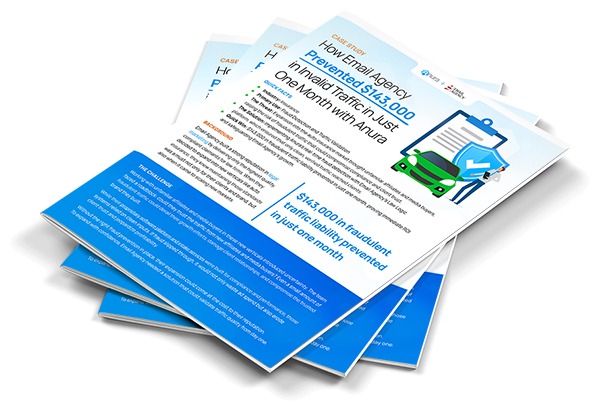
Case Study
Prevented $143,000 in IVT
in Just One Month
For a Performance Marketing Agency
Types of Ad Fraud
Impression Fraud
Impression fraud involves generating false impressions by artificially inflating the number of times an ad is served or displayed. This can be achieved through techniques like pixel stuffing, hidden ad placements, or manipulating ad refresh rates.
Click Fraud
Click fraud occurs when fraudulent clicks are generated on ads, often by automated bots or click farms. The aim is to increase the number of clicks without genuine user engagement, leading to inflated click-through rates and wasted advertising budgets.
Attribution Fraud
Attribution fraud exploits the attribution models used in advertising campaigns. Fraudsters manipulate the attribution process to wrongfully claim credit for conversions or installs, leading to incorrect allocation of advertising budgets and misleading performance metrics.
Affiliate Fraud
Affiliate fraud involves fraudulent practices by affiliates or partner networks. It includes activities like cookie stuffing, where unauthorized cookies are placed on users' devices without their knowledge, leading to falsely attributed conversions and commissions.
Bot Traffic Manipulation
Ad fraudsters use bot traffic to simulate user interactions and engagement with ads. Bots can generate fake clicks, impressions, or conversions, creating the illusion of genuine user activity and deceiving advertisers.
Lead Generation Fraud
Lead generation fraud refers to the deceptive practices employed to generate false or low-quality leads in marketing campaigns. It involves activities such as submitting fabricated or irrelevant information, utilizing automated bots or scripts, or misleading users into providing their details without genuine intent.
The Negative and Financial Impacts of Ad Fraud
Wasted Advertising Budget
Ad fraud leads to a significant waste of advertising budgets. Fraudulent activities such as fake impressions, clicks, and conversions drain advertisers' funds without providing any actual value or meaningful engagement with real users.
Decreased ROI
Ad fraud skews campaign performance metrics, leading to misleading results and reduced return on investment (ROI). Advertisers may struggle to accurately assess the effectiveness of their campaigns, make data-driven decisions, and optimize their strategies for better outcomes.
Damaged Brand Reputation
Ad fraud can harm a brand's reputation. When ads are associated with fraudulent or low-quality placements, it can erode consumer trust and perception of the brand. Negative experiences resulting from ad fraud can impact customer loyalty and hinder long-term brand growth.
Advertiser-Publisher Trust
Ad fraud strains the trust between advertisers and publishers. When advertisers unknowingly pay for fraudulent traffic or impressions, it can lead to strained relationships with publishers who may be unaware of the fraudulent activities occurring on their platforms.
Ad Tech Industry Impact
Ad fraud undermines the overall health and sustainability of the ad tech industry. It affects the confidence of advertisers, leading to reduced investments and potential disruptions in the ecosystem. Ad fraud also puts legitimate ad tech companies at a disadvantage as they compete with fraudulent entities.
Lead Generation Fraud
Lead generation fraud refers to the deceptive practices employed to generate false or low-quality leads in marketing campaigns. It involves activities such as submitting fabricated or irrelevant information, utilizing automated bots or scripts, or misleading users into providing their details without genuine intent.
Common Signs of Ad Fraud
Are your numbers too good to be true?
Recognizing the signs of fraud early will help you maximize the return on your ad spend and gain peace of mind that your metrics are accurate.
Suspiciously High Click-Through Rates (CTR)
Fraud can be indicated by abnormally high CTR that surpasses industry benchmarks. Excessively high CTR may suggest the presence of click fraud, where fraudulent clicks are artificially generated to inflate engagement metrics.
Confused leads that deny filling out a form
When your leads express confusion about receiving calls or communications from your business when they never filled out a form or expressed interest, it raises concerns about the legitimacy of your lead generation efforts. Such confusion is often an indication of ad fraud.
Abnormal Conversion Patterns
Ad fraud can disrupt the natural conversion funnel, leading to irregular conversion patterns. Unusual spikes or inconsistencies in conversion rates, especially when not aligned with campaign objectives or user behavior, may be indicative of fraudulent activities.
Inconsistent User Engagement
Ad fraud can result in inconsistent user engagement metrics. For example, if there are variations in time spent on-site, pages visited, or interaction patterns, it may imply the presence of non-human traffic or automated bot activity instead of genuine user engagement.
Excessive Traffic from Certain Locations
Unusually high traffic from specific geographic regions or IP addresses could be a sign of ad fraud. Fraudsters may manipulate traffic sources to generate fake impressions or clicks, targeting specific locations to appear more legitimate.
Irregular Spikes in Ad Performance
Sudden and unexplained spikes in ad performance metrics, such as impressions, clicks, or conversions, can be an indication of ad fraud. These irregularities may suggest the use of fraudulent techniques like ad stacking or click bots to artificially boost campaign results.
Common Methods of Ad Fraud
-
Cookie Stuffing
This is when a fraudster loads a visitor's browser with cookies from multiple websites. This can make it appear as though the user has visited those websites, even if they have not. This can be used to inflate the number of impressions an ad receives.
-
Ad Stacking
In ad stacking, multiple ads are layered on top of each other in a web page or mobile app. While only the top ad is visible, all the ads below register impressions. Ad fraudsters exploit this technique to create false impressions and artificially inflate ad performance metrics.
-
Click Fraud
Click fraud involves the fraudulent manipulation of clicks on online ads. Ad fraudsters may employ bots or scripts to generate fake clicks, artificially inflating click-through rates (CTR) and draining advertising budgets without generating actual user engagement.
-
Ad Injection
Ad injections occur when unauthorized ads are injected into a user's web browser or mobile app without the knowledge or consent of the website or app owner. These injected ads compete with legitimate ads, diverting impressions and revenue away from publishers.
-
Device Hijacking
Fraudsters hijack a unique device, mimicking a real user to click on ads, watch videos, fill out forms and steal your personal information.
-
Non-Human Traffic
Any form of web traffic that is derived from a non-human source such as bots and malware. Also known as IVT or invalid traffic.
-
Pixel Stuffing
Ad fraudsters use pixel stuffing to load multiple ads within a single pixel or a tiny ad space. These hidden ads are not visible to users but still register impressions, leading to inflated ad metrics and wasted advertising budgets.
-
Geo-Targeting Fraud
Fraudsters send ads from different locations by masking them to look like they came from the location the advertiser targeted.
-
Domain Spoofing
Domain spoofing involves fraudsters misrepresenting the source of an ad by manipulating the ad's URL. They disguise their fraudulent ads as legitimate ones from reputable websites, tricking advertisers into believing their ads are being displayed on high-quality platforms.
Choose Anura for Ad Fraud Detection
Safeguard your advertising investment with Anura's advanced ad fraud detection and prevention capabilities.
Benefits of Using Anura
Anura ensures that your ad spend is protected from fraudulent activity, allowing you to focus on reaching real customers and achieving your business goals. Choose an ad fraud detection company that leverages cutting-edge technology to help keep your campaigns secure and efficient.
- Enhanced Accuracy. Anura's ad fraud solution ensures accurate identification of fraudulent activities, with no false positives or confusing scores, providing businesses with reliable and actionable data.
- Thorough Detection. Anura analyzes user environment patterns comprehensively, detecting click farms, bots, and other fraudulent activities to provide businesses with a clear understanding of ad fraud within their campaigns.
- Fraud Prevention. Anura promptly detects fraudulent traffic, minimizing wasted ad spend and optimizing ROI for businesses, eliminating the need to apply for refunds as ads are blocked from fraudulent visitors.
- Real-Time Monitoring. Anura's real-time monitoring and alerts enable businesses to respond quickly to fraudulent activities, mitigating their impact on ad campaigns.
- Granular Analytics. Anura offers detailed analytics and insights into ad fraud trends, patterns, and sources, empowering businesses to make informed decisions in combating ad fraud effectively.
- Rulesets set by experts. Anura's solution provides pre-defined rulesets set by industry experts, ensuring businesses benefit from optimized fraud detection and prevention measures.
- Easy Integration. Anura's ad fraud solution integrates seamlessly with existing advertising platforms, allowing businesses to be up and running within minutes.
- Comprehensive Dashboard. Anura provides businesses with a comprehensive dashboard that offers a centralized view of their ad fraud data, enabling easy monitoring and analysis of campaigns.
- TAG Certified Against Fraud. Anura is TAG (Trustworthy Accountability Group) certified against fraud, demonstrating its commitment to industry-leading standards and best practices in ad fraud prevention.
- Dedicated Support. Anura offers comprehensive support to businesses, assisting them in implementing and optimizing the ad fraud solution for their specific needs.
Why Clients Choose Anura
Anura doesn’t just mitigate ad fraud, it grows your company. Since making the switch to Anura, our clients have seen great improvement in the quality of traffic and increased their spend with us. Anura is boosting our ROI along with helping our company grow; no other ad fraud solution has ever done that for us.

Aided by Anura Solutions, QuinStreet was able to apply existing brand spend more productively; conversions increased 20-25% with no change in budget allocation. This led to further increases in QuinStreet’s branded wallet share.
Our number one priority is to protect the quality of leads that we send to our advertisers. To that end, an essential component of our analytics platform is Anura. Unlike other fraud detection solutions that we've tried, Anura avoids false positives and gives us the insights that we need to navigate an always challenging affiliate landscape.

Anura and their team have been instrumental in our efforts to maintain high-quality traffic to our site while growing our network audience. Their platform aligns with our mission to deliver high intent users to our carrier partners, and we've been pleased with the overall results.

Anura literally saved our business. We were getting swarmed with untold amounts of bot traffic to our call/sales funnel, but with the installation of a snippet of Anura code and some tech wizadry (all of which they walked me through)... problem solved and business saved! Biz-saving, stress reducing, and worth every penny.

I have worked with Anura for a couple of years now. They have excellent client service, and the product has met every expectation I have engendered. They have responded quickly and effectively to our requests to enhance our product experience. I recommend them without reservation.

Beyond the easy-to-use analytics dashboard, BriteBox trusts in the accuracy of Anura's identification of fraud, both in the pre-bid and post-click analysis. After processing over 18 million visitors and yet to see a false positive, BriteBox sees the long-term benefits of having accuracy in their ad fraud vendor.

Picture Anura and other ad fraud solutions like a Venn Diagram. There is a section that overlaps that both Anura and other solutions catch, but then there is the other area. We find that the Anura system catches a lot of stuff the others didn't, and overall, paints a better picture of what is actually happening.

At Gaijin Entertainment, we're running all of our relevant online traffic by Anura to eliminate user acquisition fraud for our online gaming titles. They have helped us to greatly reduce direct acquisition costs as well as the time needed to identify and ban fraudulent sources. They have a great and very responsive customer service that promptly handles questions and other inquiries. A definitive recommendation.

Anura was able to identify the affiliates who were not the best affiliates. We were able to start pruning our affiliate lists because of what we found in Anura. We were going to pay affiliates a lot of money, but because of chargebacks and other issues, we were actually losing money.
Why Clients Choose Anura
Anura doesn’t just mitigate ad fraud, it grows your company. Since making the switch to Anura, our clients have seen great improvement in the quality of traffic and increased their spend with us. Anura is boosting our ROI along with helping our company grow; no other ad fraud solution has ever done that for us.

Aided by Anura Solutions, QuinStreet was able to apply existing brand spend more productively; conversions increased 20-25% with no change in budget allocation. This led to further increases in QuinStreet’s branded wallet share.

Our number one priority is to protect the quality of leads that we send to our advertisers. To that end, an essential component of our analytics platform is Anura. Unlike other fraud detection solutions that we've tried, Anura avoids false positives and gives us the insights that we need to navigate an always challenging affiliate landscape.

Anura and their team have been instrumental in our efforts to maintain high-quality traffic to our site while growing our network audience. Their platform aligns with our mission to deliver high intent users to our carrier partners, and we've been pleased with the overall results.

Anura literally saved our business. We were getting swarmed with untold amounts of bot traffic to our call/sales funnel, but with the installation of a snippet of Anura code and some tech wizadry (all of which they walked me through)... problem solved and business saved! Biz-saving, stress reducing, and worth every penny.

I have worked with Anura for a couple of years now. They have excellent client service, and the product has met every expectation I have engendered. They have responded quickly and effectively to our requests to enhance our product experience. I recommend them without reservation.

Picture Anura and other ad fraud solutions like a Venn Diagram. There is a section that overlaps that both Anura and other solutions catch, but then there is the other area. We find that the Anura system catches a lot of stuff the others didn't, and overall, paints a better picture of what is actually happening.

Anura was able to identify the affiliates who were not the best affiliates. We were able to start pruning our affiliate lists because of what we found in Anura. We were going to pay affiliates a lot of money, but because of chargebacks and other issues, we were actually losing money.
At Gaijin Entertainment, we're running all of our relevant online traffic by Anura to eliminate user acquisition fraud for our online gaming titles. They have helped us to greatly reduce direct acquisition costs as well as the time needed to identify and ban fraudulent sources. They have a great and very responsive customer service that promptly handles questions and other inquiries. A definitive recommendation.

Beyond the easy-to-use analytics dashboard, BriteBox trusts in the accuracy of Anura's identification of fraud, both in the pre-bid and post-click analysis. After processing over 18 million visitors and yet to see a false positive, BriteBox sees the long-term benefits of having accuracy in their ad fraud vendor.

FAQs about Ad Fraud Detection
How does ad fraud detection work?
Ad fraud detection analyzes every visitor who interacts with your ads or website and decides in real time whether that visitor is a real person or fraud. Anura evaluates 800+ data points per visitor, including device, network and environmental signals, and classifies each one as good, warning or bad. You can then block bots, AI-assisted fraud and human fraud before they waste budget or pollute your data.
Who needs ad fraud detection?
Any business that pays for traffic, clicks or leads needs ad fraud detection. Anura protects lead generation companies, affiliate networks, ad tech platforms and brands running paid search, social and programmatic campaigns. If your budget, commissions or campaign optimization depend on knowing which visitors are real, fraud is already affecting your results.
How is ad fraud detection different from ad verification?
Ad verification confirms that an ad was served where and how it was bought, covering viewability, brand safety and placement. Ad fraud detection checks whether the visitor who saw, clicked or converted was a real person. Anura focuses on fraud detection, identifying bots, AI-assisted fraud and human fraud across clicks, leads and conversions, not just impressions.
What are the benefits of using an ad fraud detection solution?
Ad fraud detection protects both your budget and your data. Blocking fake clicks, leads and conversions stops wasted spend. Removing them from your reporting shows you what is actually working. With clean data, your bidding, attribution and budget decisions point toward real customers, so you can scale the channels that truly perform.
How does ad fraud affect my campaign data and bidding algorithms?
Ad fraud creates clicks, leads and conversions that never become customers. Because platforms like Google Ads and Meta optimize toward the conversions they see, fake activity trains your bidding algorithms to find more fake traffic. Attribution and ROAS become unreliable, and budget shifts to the wrong sources. If your data is wrong, your decisions are too.
How accurate are ad fraud detection systems?
Accuracy varies widely between vendors, so ask how a provider measures it and whether they guarantee it. Anura guarantees 99.999% accuracy when Anura Script identifies a visitor as bad. That accuracy matters because every false positive, a real visitor wrongly flagged as fraudulent, is a lost potential customer.
Can ad fraud detection block legitimate traffic?
It can if the tool is inaccurate. When a real visitor is incorrectly identified as fraudulent, that false positive costs you a potential customer and skews your results. Anura is built to identify bots, AI-assisted fraud and human fraud without blocking real visitors, and it backs its bad-visitor results with a 99.999% accuracy guarantee.
Can fraud detection software tell the difference between legitimate VPN users and fraudulent traffic?
Yes. Using a VPN or privacy browser is not fraud on its own, and many real customers use them. Anura evaluates 800+ data points per visitor instead of relying on simple VPN detection alone. That lets it separate privacy-conscious real users from fraudsters who use VPNs, proxies and residential IPs to hide who they are.
How do I set up ad fraud detection, and how long does it take?
Most teams add Anura with a single JavaScript tag, Anura Script, on their landing pages, or connect through the Anura Direct API from their server. Results appear in the Anura dashboard. Typical setup is quick and easy with no tech or IT team required. Three-minute install with Google Tag Manager is just one installation option. Anura's team can help with the integration too.
Which ad platforms does Anura protect?
Anura protects traffic from any source because it analyzes the visitor, not the ad network. That includes Google Ads, Microsoft Ads, Meta and other social platforms, affiliate and lead generation programs, and programmatic campaigns, etc.
How do I choose the right ad fraud detection solution?
Look for five things: guaranteed accuracy with a low false-positive rate, real-time detection, coverage for every channel you buy, detection of human and AI-assisted fraud (not just simple bots), and reporting your team can act on. Test any vendor on your own traffic first. Anura offers a free traffic quality audit for this.
How can ad fraud be prevented?
The most effective way to prevent ad fraud is to detect it in real time and stop paying for it. Identify fake visitors as they arrive, block, redirect or monitor them, and cut off the sources sending them. Add regular traffic audits and clear fraud terms in your partner and affiliate agreements. An Anura traffic quality audit shows where fraud enters your campaigns today.
Resources
Oct 21, 2026
17 min read
What is a Bot Farm? How Bot Farms Work and Whether They Are Illegal
Oct 20, 2026
9 min read
What Is Ad Fraud?
Oct 14, 2026
7 min read
What Is a Bot? Types of Bots and How They Work
Oct 7, 2026
5 min read
What Is GDPR? A Compliance Guide
Sep 30, 2026
6 min read
What is Web Scraping and Digital Ad Fraud — The Complete Guide
Oct 15, 2026
4 min read
Bot Detection API: How to Choose the Right Solution for Your Platform
Oct 8, 2026
4 min read
Why the Typical Tools Fall Short
Oct 6, 2026
27 min read
What is Viewbotting?
Sep 22, 2026
4 min read
Which Platforms Are the Most Effective at Detecting Bots on Websites?
Sep 18, 2026
3 min read
Which Click Fraud Prevention Tools Have Real-Time Blocking Features That Actually Work?
Sep 15, 2026
4 min read
What Click Fraud Prevention Tools Work Best for Google Ads & Facebook Campaigns?
The Ultimate Guide to Ad Fraud: A Complete Guide
This guide is for both seasoned marketers and new advertisers. Ad fraud may seem simple but is ...
Affiliate Marketing Fraud 101
This eBook provides key insights into the ad fraud threats facing affiliate marketing campaigns, ...
Programmatic Fraud 101: The Complete Beginner's Guide
Programmatic Fraud 101 provides an overview of ad fraud in programmatic marketing, detailing its ...
Lead Generation 101
This is a beginner's guide providing marketers insights into common lead generation fraud ...
What Are Bots: 101
This eBook offers a detailed insight into bots' capabilities and potentially harmful effects on ...
Ad Fraud 101
This is an introductory guide offering marketers a comprehensive overview of the complex ad ...
Get a Free Traffic Quality Audit
Ready to stop ad fraud and boost your ROI?
We’re here to help.
Contact us for a 15 day free traffic quality audit to:
-
Discover how much fraudulent traffic is impacting your campaigns.
-
Identify sources of click fraud and bot activity.
-
Learn how to block invalid traffic and protect your ad spend.