


Ad Fraud Detection
Detect and eliminate fraudulent ad traffic.
Before you can defend against ad fraud, you must first be able to detect it.
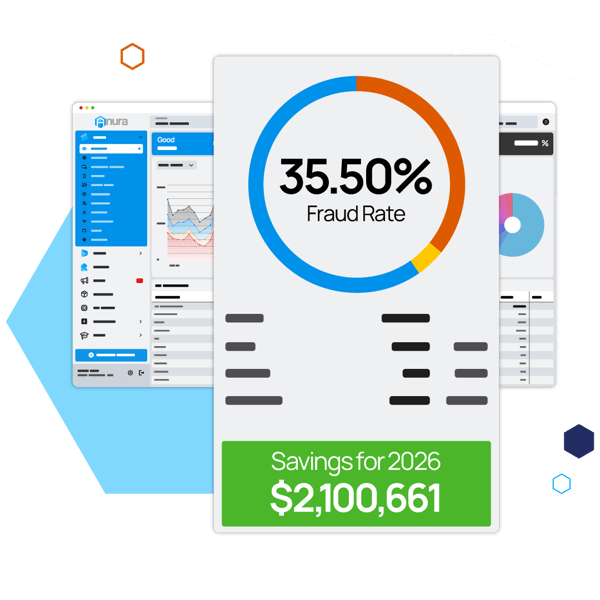
What is ad fraud detection?
Ad fraud detection is the process of identifying fake interactions with your ads and website (impressions, clicks, form fills, installs and conversions created by bots, AI-assisted fraud and human fraud farms) so you can stop them before they waste budget or corrupt your data.
Ad fraud, also called advertising fraud, is any deliberate attempt to generate fake ad engagement to steal advertising dollars.
Why it matters: fraud does more than inflate costs. Fake traffic feeds your analytics, attribution and bidding algorithms, so you end up investing in the channels that look best, not the ones that perform best. If your data is wrong, your decisions are too.
Anura identifies bots, AI-assisted fraud and human fraud in real time, without blocking real visitors, so you can scale what’s actually working.
Ad fraud can be committed by bots, malware, or humans.
Ad fraud comes in many different shapes and sizes.
Creating an effective strategy to combat it starts with understanding how ad fraud happens.

What is a Bot?
Short for “robot,” a bot is an automated software program built to carry out a specific task that most people would find too repetitive or time-consuming. Bot traffic usually mimics normal activity such as clicking an ad, placing items in shopping carts, commenting on social media, or filling out a form. Bot fraud usually involves the use of bot farms or large collectives of bots that act in unison that is usually referred to as a botnet.

What is Malware?
Malware is malicious software installed on an unsuspecting user's computer, either desktop or mobile, that is designed to mimic a real user to perform tasks that steal advertising dollars. Tasks like viewing or clicking on ads, watching videos, filling in forms, and other unsavory activities unbeknownst to the user.

What is Human Fraud?
Human fraud is the hardest form of fraud to detect as it relies on a network of humans, instead of using bots or malware, to interact with ads and create false transactions. Because actual humans are interacting with the ads, there are no obvious signs that help ad fraud detection tools differentiate normal traffic from human fraud.

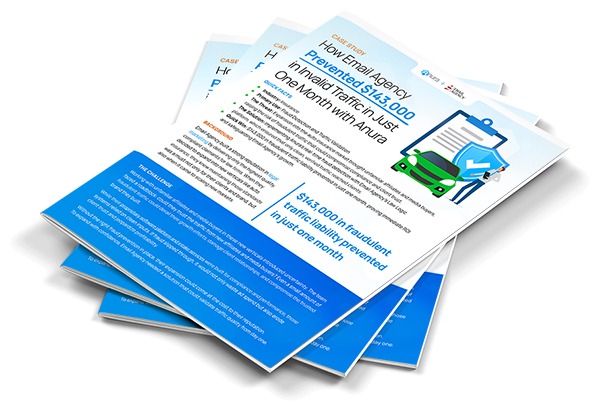
Case Study

Prevented $143,000 in IVT
in Just One Month
For a Performance Marketing Agency

Suspiciously High Click-Through Rates (CTR)
Fraud can be indicated by abnormally high CTR that surpasses industry benchmarks. Excessively high CTR may suggest the presence of click fraud, where fraudulent clicks are artificially generated to inflate engagement metrics.

Confused leads that deny filling out a form
When your leads express confusion about receiving calls or communications from your business when they never filled out a form or expressed interest, it raises concerns about the legitimacy of your lead generation efforts. Such confusion is often an indication of ad fraud.

Abnormal Conversion Patterns
Ad fraud can disrupt the natural conversion funnel, leading to irregular conversion patterns. Unusual spikes or inconsistencies in conversion rates, especially when not aligned with campaign objectives or user behavior, may be indicative of fraudulent activities.

Inconsistent User Engagement
Ad fraud can result in inconsistent user engagement metrics. For example, if there are variations in time spent on-site, pages visited, or interaction patterns, it may imply the presence of non-human traffic or automated bot activity instead of genuine user engagement.

Excessive Traffic from Certain Locations
Unusually high traffic from specific geographic regions or IP addresses could be a sign of ad fraud. Fraudsters may manipulate traffic sources to generate fake impressions or clicks, targeting specific locations to appear more legitimate.

Irregular Spikes in Ad Performance
Sudden and unexplained spikes in ad performance metrics, such as impressions, clicks, or conversions, can be an indication of ad fraud. These irregularities may suggest the use of fraudulent techniques like ad stacking or click bots to artificially boost campaign results.


Why Clients Choose Anura
Maintain high-quality traffic
Anura and their team have been instrumental in our efforts to maintain high-quality traffic to our site while growing our network audience. Their platform aligns with our mission to deliver high intent users to our carrier partners, and we've been pleased with the overall results.

Lev Barinskiy
Co-Founder and CEO

Saved our business
Anura literally saved our business. We were getting swarmed with untold amounts of bot traffic to our call/sales funnel, but with the installation of a snippet of Anura code and some tech wizadry (all of which they walked me through)... problem solved and business saved! Biz-saving, stress reducing, and worth every penny.

Peter Giza
Co-Founder

Excellent client service
I have worked with Anura for a couple of years now. They have excellent client service, and the product has met every expectation I have engendered. They have responded quickly and effectively to our requests to enhance our product experience. I recommend them without reservation.

Dennis Evanson
Compliance and QA

18M+ visitors processed with zero false positives
Beyond the easy-to-use analytics dashboard, BriteBox trusts in the accuracy of Anura's identification of fraud, both in the pre-bid and post-click analysis. After processing over 18 million visitors and yet to see a false positive, BriteBox sees the long-term benefits of having accuracy in their ad fraud vendor.

Penny Lee
Former Head of Sales

Catches fraud others miss
Picture Anura and other ad fraud solutions like a Venn Diagram. There is a section that overlaps that both Anura and other solutions catch, but then there is the other area. We find that the Anura system catches a lot of stuff the others didn't, and overall, paints a better picture of what is actually happening.
Compliance Team
Apollo Interactive

Reduced user acquisition costs
At Gaijin Entertainment, we're running all of our relevant online traffic by Anura to eliminate user acquisition fraud for our online gaming titles. They have helped us to greatly reduce direct acquisition costs as well as the time needed to identify and ban fraudulent sources. They have a great and very responsive customer service that promptly handles questions and other inquiries. A definitive recommendation.

Dennis Wierzbowski
Head of Influencer Marketing

Identified bad affiliates
Anura was able to identify the affiliates who were not the best affiliates. We were able to start pruning our affiliate lists because of what we found in Anura. We were going to pay affiliates a lot of money, but because of chargebacks and other issues, we were actually losing money.
Judith-Ann Sarjaent
5 star reviews on Google — all earned, never bought.

Why Clients Choose Anura
80% traffic blocked from one provider
Anura doesn’t just mitigate ad fraud, it grows your company. Since making the switch to Anura, our clients have seen great improvement in the quality of traffic and increased their spend with us. Anura is boosting our ROI along with helping our company grow; no other ad fraud solution has ever done that for us.

Joe D'Aloia
Director of Campaign Operations

20-25% increase in conversions
Aided by Anura Solutions, QuinStreet was able to apply existing brand spend more productively; conversions increased 20-25% with no change in budget allocation. This led to further increases in QuinStreet’s branded wallet share.

Marty Collins
Chief Legal and Privacy Officer

Avoids false positives
Our number one priority is to protect the quality of leads that we send to our advertisers. To that end, an essential component of our analytics platform is Anura. Unlike other fraud detection solutions that we've tried, Anura avoids false positives and gives us the insights that we need to navigate an always challenging affiliate landscape.

Joey Lin
President and Founder

Maintain high-quality traffic
Anura and their team have been instrumental in our efforts to maintain high-quality traffic to our site while growing our network audience. Their platform aligns with our mission to deliver high intent users to our carrier partners, and we've been pleased with the overall results.
Lev Barinskiy
Co-Founder and CEO
Saved our business
Anura literally saved our business. We were getting swarmed with untold amounts of bot traffic to our call/sales funnel, but with the installation of a snippet of Anura code and some tech wizadry (all of which they walked me through)... problem solved and business saved! Biz-saving, stress reducing, and worth every penny.
Peter Giza
Co-Founder
Excellent client service
I have worked with Anura for a couple of years now. They have excellent client service, and the product has met every expectation I have engendered. They have responded quickly and effectively to our requests to enhance our product experience. I recommend them without reservation.
Dennis Evanson
Compliance and QA
Catches fraud others miss
Picture Anura and other ad fraud solutions like a Venn Diagram. There is a section that overlaps that both Anura and other solutions catch, but then there is the other area. We find that the Anura system catches a lot of stuff the others didn't, and overall, paints a better picture of what is actually happening.
Compliance Team
Apollo Interactive
Identified bad affiliates
Anura was able to identify the affiliates who were not the best affiliates. We were able to start pruning our affiliate lists because of what we found in Anura. We were going to pay affiliates a lot of money, but because of chargebacks and other issues, we were actually losing money.
Judith-Ann Sarjaent
Reduced user acquisition costs
At Gaijin Entertainment, we're running all of our relevant online traffic by Anura to eliminate user acquisition fraud for our online gaming titles. They have helped us to greatly reduce direct acquisition costs as well as the time needed to identify and ban fraudulent sources. They have a great and very responsive customer service that promptly handles questions and other inquiries. A definitive recommendation.
Dennis Wierzbowski
Head of Influencer Marketing
18M+ visitors processed with zero false positives
Beyond the easy-to-use analytics dashboard, BriteBox trusts in the accuracy of Anura's identification of fraud, both in the pre-bid and post-click analysis. After processing over 18 million visitors and yet to see a false positive, BriteBox sees the long-term benefits of having accuracy in their ad fraud vendor.
Penny Lee
Former Head of Sales
Resources


