Richard Kahn
TL;DR
- Instagram bots use fake accounts to inflate followers, likes, comments, and engagement, often to promote scams or commit ad fraud.
- Bot activity distorts audience demographics, engagement metrics, and campaign performance, making it harder to measure genuine results.
- Fake followers, generic comments, suspicious profiles, and unusual activity patterns are common signs of Instagram bots.
- Regularly audit followers, vet influencers, and use Instagram’s built-in tools to filter, block, and report spam accounts.
- Bots can also click ads and waste ad spend, feeding misleading data into campaign optimization.
- Anura detects and blocks bots, click fraud, and other invalid traffic to help protect ad budgets and keep marketing focused on real people.
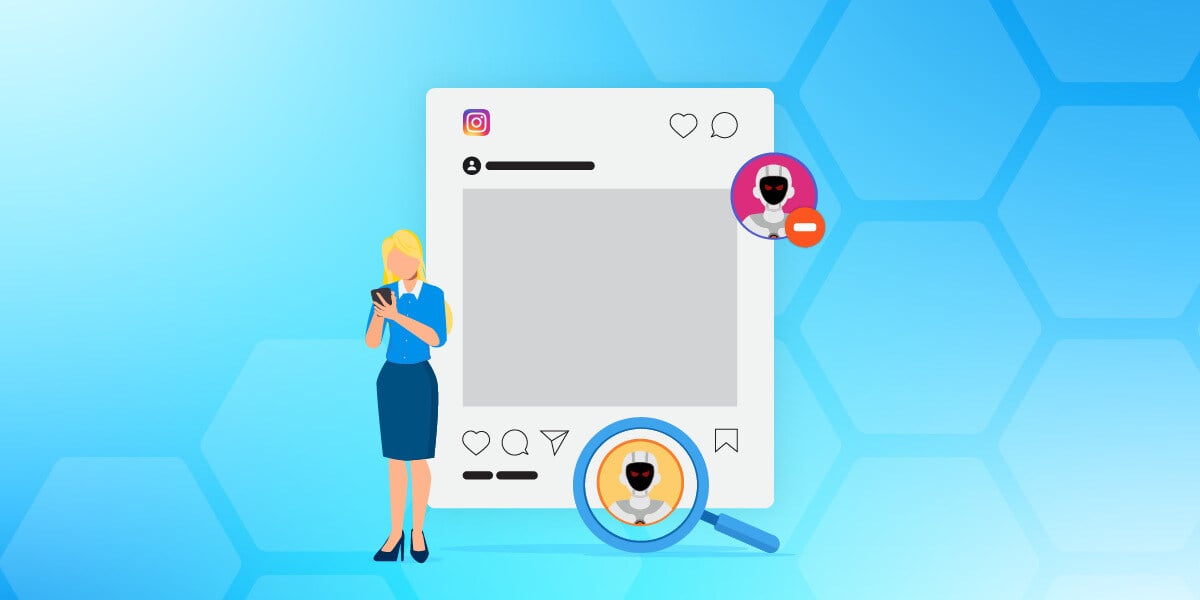
Instagram bot accounts follow users, like posts, watch Stories, leave comments, send DMs, and sometimes click ads. Operators build them to inflate follower counts, sell fake engagement, promote affiliate offers, run phishing scams, and commit ad fraud. Some automation is legitimate, but most bots on Instagram exist to create misleading signals instead of real interactions.
If you’ve ever asked what spam accounts on Instagram are, the short answer is profiles that push unwanted content or fake activity instead of joining the community. Search “what’s a spam account on Instagram” or “what’s a spam account on insta” and the answers point the same way. Most are automated, so any bot account Instagram users spot is probably spam too.
The Most Common Types of Bots
Not every fake account behaves the same way. Knowing the main types makes them easier to recognize:
- Follow bots automatically follow large numbers of accounts, hoping for follow-backs that inflate their own counts.
- Like bots on Instagram tap the heart on posts in bulk, either to boost a post’s popularity or to get noticed by the account owner.
- Comment bots leave canned messages, often promoting a product or service, and rarely relate to the post.
- Message bots send automated DMs pushing sales pitches, “collab” offers, or suspicious links.
- Phishing bots pose as Instagram support or a brand to steal login credentials.
Advanced bots mix these behaviors. Some even post images or Stories on a schedule to avoid looking like spam.
How Many Bots on Instagram Are There?
Instagram doesn’t publish an official count. Meta does report enforcement across its apps, including 3.4 billion fake accounts removed from Facebook in 2025, with 99% caught before anyone reported them. Industry estimates of inauthentic accounts commonly land between roughly 9% and 15%.
Removals never end the problem, because creating accounts is cheap and automated. Spammers on Instagram simply rebuild after each purge. Brands should treat fake accounts as a normal part of platform activity and plan for them, rather than hoping they disappear.
Why Bot Followers Matter
Bot followers are fake or automated accounts that follow you without being real potential customers. Many people link them to purchased followers, but brands also pick them up organically as visibility grows. Either way, they:
- Don’t buy products or engage authentically
- Skew your audience demographics
- Pull down your engagement rate
- Make growth metrics look better than reality
For marketers, audience quality matters more than audience size. A smaller group of real people is worth more than thousands of inactive or automated followers, because only real people respond to offers, share content, and become customers.
There is also a platform risk. Instagram’s rules prohibit using bots to grow an account, so brands that buy followers or use growth automation can see restricted reach, or even a ban. The shortcut tends to cost more than it gives.
How Instagram Bots Hurt Marketing Performance
Weaker engagement quality. Bot likes and follows can make mediocre content look successful. Those signals reflect no real interest, so they hide what your audience actually wants.
Wasted ad spend. Ad platforms optimize on engagement signals. When bots interact with your ads, they feed inaccurate data into targeting and reporting, and your budget chases people who will never buy.
Distorted audience insights. Analytics become less reliable when fake accounts are mixed into your demographics. You may build campaigns around a customer profile that doesn’t exist.
Scam exposure. Bots that send malicious links can put your team, your customers, and your brand’s reputation at risk.
Credibility damage. Shoppers notice fake followers and suspicious comment sections. Heavy bot activity makes a brand look less trustworthy.
How to Tell if an Instagram Account Is a Bot
No single trait proves an account is automated, but patterns add up:
- Thin profiles: no photo, an empty or generic bio, and usernames made of random letters and numbers. Names like “1000followersfree” or a name followed by a long number are common.
- Lopsided ratios: thousands of accounts followed, very few followers.
- Generic comments: “Nice post!” or “Love this!” repeated across unrelated posts. This kind of insta spam is a classic giveaway.
- Recycled content: reposted or stolen images and hashtag-stuffed captions.
- Nonstop activity: posting, liking, or commenting around the clock.
- Suspicious links in the bio: short, promotional bios that point to an unfamiliar website.
- No real conversation: genuine users reply when you respond. Bots don’t, or they answer with the same canned phrase.
Some real users share a few of these traits, so look for several signals together before drawing conclusions.
How to Find Instagram Bots in Your Followers
Audit your follower list and comments regularly. Watch for:
- Sudden follower spikes with no matching campaign or post
- Followers in regions unrelated to your business
- Clusters of similar usernames or profile photos
- High follower counts paired with very low engagement
- The same comment appearing on several of your posts
Run this check monthly, and again after any viral post or paid promotion, since those are the moments, bots tend to pile on. Remove or block the accounts you find, and note any patterns so you can spot the next wave faster.
How to Protect Your Account From Spam
Instagram gives you tools to cut down on unwanted activity:
- Turn on Hidden Words to filter ig spam and offensive comments before they reach your posts. You can also add your own words and phrases, such as “DM for collabs.”
- Filter message requests so suspicious DMs land in a separate folder instead of your main inbox.
- Restrict or block repeat offenders so they can’t keep contacting you.
- Don’t click unknown links. If a DM claims to be from Instagram support, treat it as phishing and go directly to the app’s settings instead.
- Review connected apps and remove any you no longer use.
How to Report Spam Accounts
- Open the profile.
- Tap the three-dot menu.
- Select Report.
- Choose a reason, such as spam, fake account, or scam.
Every spammer Instagram profile you report helps the platform identify and remove larger networks. Blocking the account afterward stops it from contacting you again.
What If Instagram Thinks I’m a Bot?
Real users sometimes get flagged. If Instagram thinks I’m a bot, the cause is usually behavior that resembles automation: rapid follow and unfollow sprees, repetitive comments, or third-party growth apps. Even well-meaning spamming Instagram habits, like posting identical comments on dozens of accounts, can trigger restrictions.
Slow down, disconnect third-party tools, and follow any verification prompts Instagram gives you. If you manage accounts for a brand, spread out engagement and vary your replies so your activity looks like what it is: a person talking to customers.
Vetting Influencers for Fake Audiences
Brands that pay creators for reach should check for bot activity before signing a deal. Ask for audience demographics and compare them to what you see in the comments. A creator with a large following but generic, repetitive comments may have an inflated audience. Look at engagement rate over time, not just follower totals, and be cautious of sudden jumps. A quick audit up front can save a campaign budget.
Reducing the Impact on Your Ads
Cleaning up your followers only goes so far. Bots that reach your paid campaigns can click ads, inflate costs, and corrupt the data you use to optimize. Many of them trace back to organized operations. Anura’s guide to bot farms explains how these networks generate fake likes, comments, and clicks at scale.
Instagram bots aren’t going away, and they will keep getting harder to distinguish from real people. Brands that audit their audiences, vet their partners, and protect their ad traffic keep their metrics honest and their budgets focused on real customers.
Anura’s bot detection software identifies and blocks invalid traffic before it affects your results. By keeping bots, click fraud, and other invalid traffic away from your ads, you can focus your budget on reaching real people. Stop bots from destroying your ROI. Get in touch with Anura today to see how we can keep bots from seeing your ads and support genuine growth.